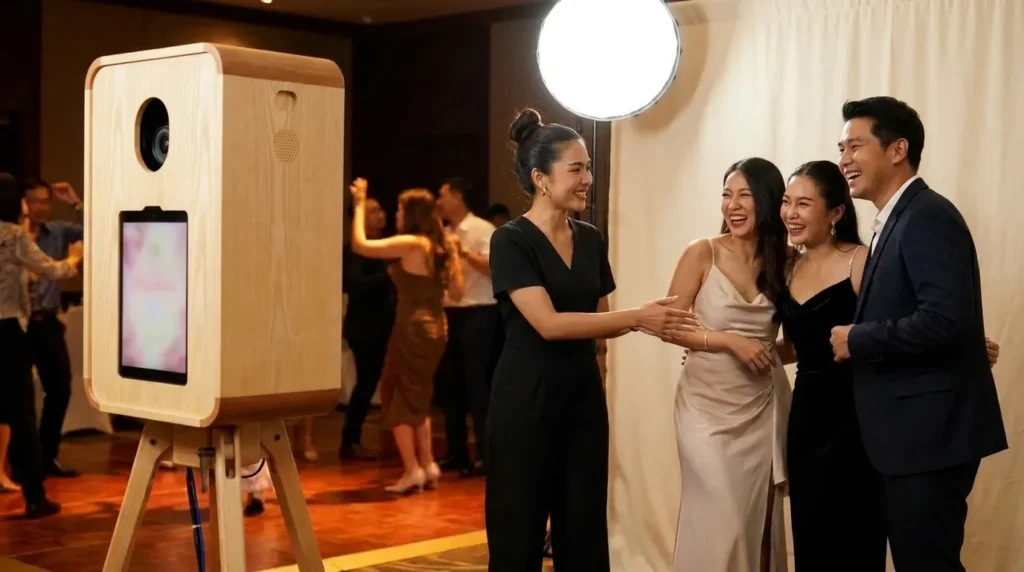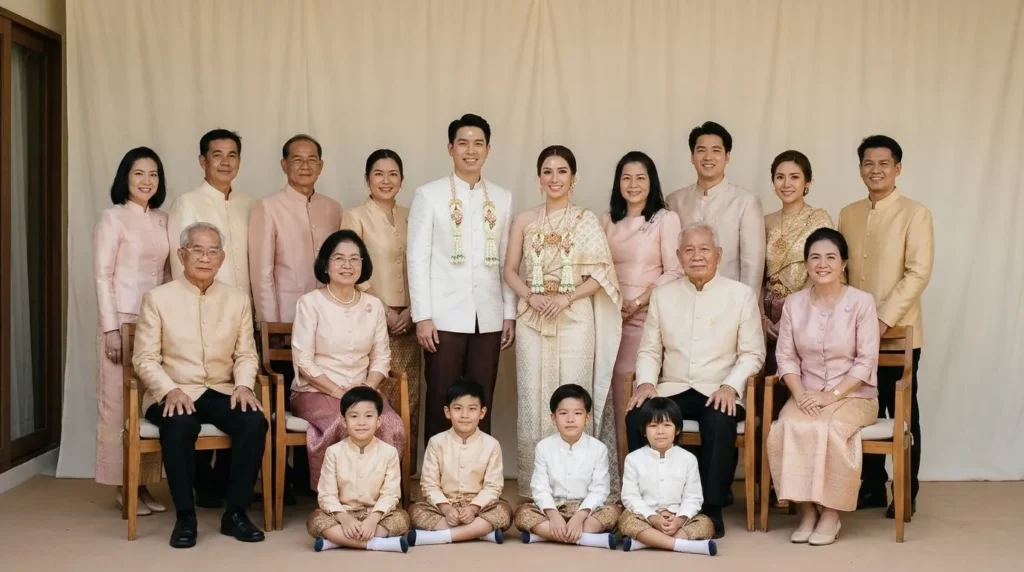
A booth photo for two families who have just met
A picture labelled “both families” can still look like two separate groups with a couple between them. Try one small introduction before arranging the next frame.
Wedding Journal Event planning
One partner is about to change for dinner. A parent wants a picture of both families in their ceremony clothes, and half the wedding party has already wandered toward the terrace. Give that particular picture its own cue.

One partner is about to change for dinner. A parent wants a picture of both families in their ceremony clothes, and half the wedding party has already wandered toward the terrace. Give that particular picture its own cue.
Write down who needs to be in this frame. Use names instead of “immediate family” when the two partners use that phrase differently. Share the list with one person from each side who can recognise and gather their relatives.
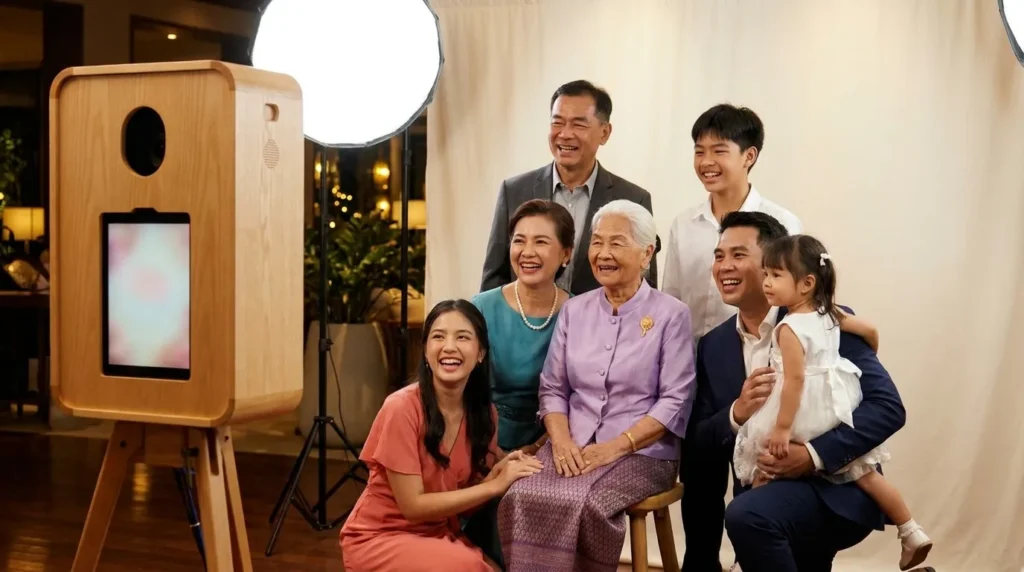
Ask whoever is helping with the change when the couple needs to leave. Have the relatives waiting beside the backdrop before calling the couple over. If someone is missing, take the picture with those present and give the couple time to change.
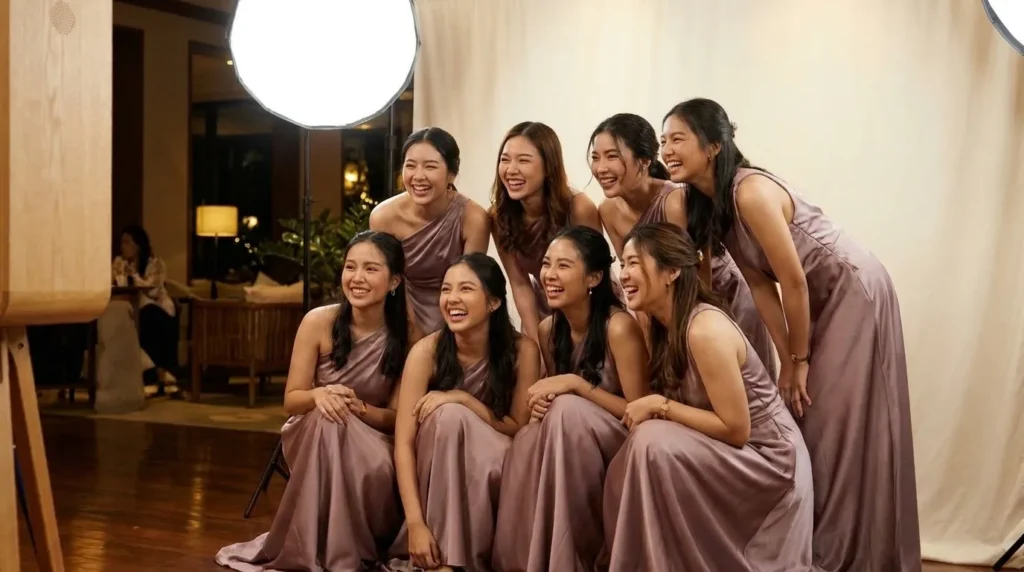
Take one frame with everyone facing the camera. For the second, ask the couple to turn toward their families and let the group react. Give the prints to a named relative before the two partners leave for the dressing room.
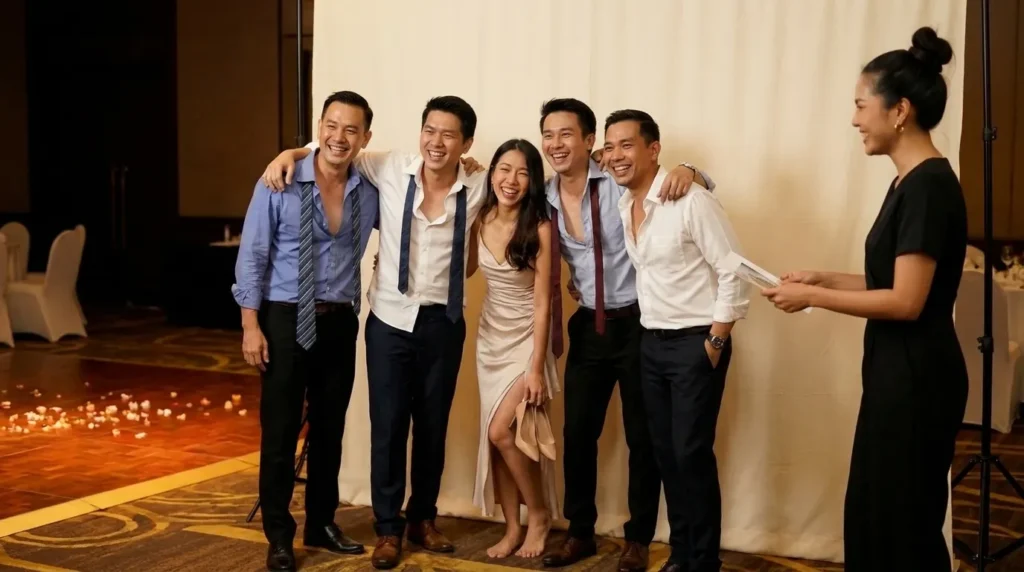
A picture labelled “both families” can still look like two separate groups with a couple between them. Try one small introduction before arranging the next frame.
At a morning ceremony in one venue and dinner in another, the two sets of prints can take different routes home. Make a plan simple enough to survive a change of clothes, a car ride and a hotel check-in.
An empty corner can look spacious before dinner. Add a waiting group, someone leaning over to collect a strip and a server carrying plates, and the same corner starts to work quite differently.